
A blocked drain emergency at 3 AM doesn’t just threaten operations—it puts your facility at immediate risk of property damage, regulatory penalties, and occupant safety issues. For facility managers across Melbourne’s commercial sector, the difference between a contained incident and a costly disaster often comes down to what happens in the first hour.
When sewage backs up in an aged care facility or stormwater floods a manufacturing floor, you need an emergency plumber Melbourne facility managers can trust—one who understands commercial compliance, responds immediately, and documents everything for regulatory requirements.
This guide outlines the critical actions facility managers must take in the first 60 minutes of a blocked drain emergency. You’ll learn how to protect your facility, maintain compliance, and coordinate an effective emergency response that minimises downtime and documentation gaps.
Why Emergency Blocked Drains Demand Immediate Action
A blocked drain in a commercial facility is not just a maintenance issue. It can trigger property damage, safety risks, and operational disruption fast. Sewage can contaminate floors, walls, and equipment within minutes. Water near electrical systems can also create immediate hazards.
Compliance and reporting can also start straight away. Many sectors have strict requirements for how incidents are handled and documented. If the response is poorly documented or delayed, it can create audit and penalty risk on top of the original issue.
Health and business impacts escalate the longer it’s left. Sewage exposure is a hygiene risk, and water overflow increases slip hazards in occupied spaces. Closures can also be difficult, especially for schools, aged care, and sites with tight delivery schedules. That’s why the first 60 minutes matter. This is the window to secure the area, limit damage, start records, and get the right help on the way.
The First 60 Minutes: Critical Response Steps
The first hour is when a blocked drain either stays contained or escalates. These time-based steps help you protect people, limit damage, and keep compliance on track.
Minutes 1-5: Immediate Safety and Containment
Your first actions protect occupants and prevent escalation. Evacuate the affected area immediately—sewage exposure and slip hazards demand zero tolerance. Secure the zone with physical barriers and signage. If electrical equipment is near water, shut down power to that area at the distribution board.
Identify the water source if possible. Locate the nearest isolation valve for the affected drainage line. For toilet or sink backups, close the supply valve to prevent additional water from entering the system. For floor waste overflows, identify whether it’s sewer, stormwater, or trade waste—this determines regulatory obligations.
Contact your 24-hour emergency plumbing service immediately. Don’t wait to assess severity—commercial drainage issues rarely resolve without professional intervention. VIP Plumbing Group‘s emergency line (1800 319 522) connects you directly to licensed commercial plumbers who understand facility requirements.
Minutes 5-15: Documentation and Notification
Start documenting immediately—regulatory compliance depends on it. Photograph the affected area from multiple angles. Record the time you discovered the issue, when you isolated the area, and when you contacted emergency services. Note visible water levels and any equipment or inventory exposed to contamination.
Notify relevant stakeholders based on facility type. Aged care managers must inform the Director of Nursing and prepare for potential Aged Care Quality and Safety Commission reporting. School facility managers should contact the principal and prepare communications for parents if areas will be closed. Manufacturing facilities need production supervisors notified to assess downstream impacts.
Check your emergency response plan. Commercial facilities should have pre-established protocols for plumbing emergencies. Review your contractor list—Is your preferred plumber licensed for commercial work in Victoria? Do they carry adequate public liability insurance for your facility type?
Minutes 15-30: Assessment and Temporary Mitigation
While waiting for emergency response, assess the scope. Identify all affected drains—a backup in one location often indicates a mainline blockage affecting multiple fixtures. Check adjacent areas for early signs of water intrusion through floors or walls. In multi-storey buildings, inspect the level below for ceiling leaks.
Implement temporary containment where safe to do so. Place absorbent materials at the perimeter to prevent spread. If overflow is minimal and no sewage is present, wet vacuums can extract standing water. Never attempt to clear blockages with chemical drain cleaners in commercial systems—they’re ineffective on main lines and create chemical hazards during professional clearing.
Prepare building access information for responding plumbers. Locate drainage plans if available—VIP Plumbing Group’s commercial experience means we can work without plans, but they accelerate diagnosis. Identify cleanout access points. Ensure after-hours entry procedures are arranged if the facility is secured.
Minutes 30-60: Coordination and Continuity Planning
Brief your emergency plumber upon arrival. Explain facility type and specific compliance requirements. Describe the timeline of events. Show them existing drainage documentation. Request digital reporting—VIP Plumbing uses SimPRO to provide immediate electronic records that satisfy audit requirements.
Plan for operational continuity. If bathrooms are affected, identify alternative facilities and post signage. For manufacturing areas, determine which operations can continue and which must pause. Aged care facilities should activate alternative toileting plans and notify nursing staff of location changes.
Consider whether you need a blocked drain plumber near you for longer-term support. Some blockages require excavation or extensive repairs beyond immediate clearing. VIP Plumbing Group provides comprehensive commercial drain solutions, including CCTV inspection to prevent recurrence.
Emergency Assessment: What to Check Immediately
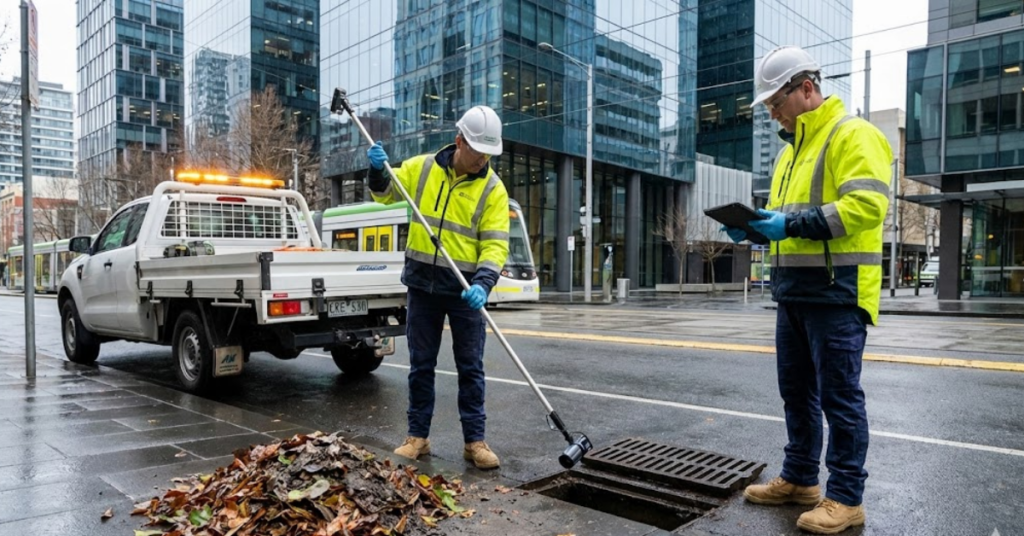
Once you’ve secured the area and contacted emergency services, rapid assessment guides your next steps. Understanding the blockage type and identifying critical risk factors determines both immediate actions and regulatory obligations.
Identifying the Blockage Type
Different blockage types demand different responses. Understanding what you’re dealing with shapes your emergency protocol and regulatory obligations.
Sewer blockages create the highest health risk. Indicators include foul odours, dark water, and backup in multiple fixtures simultaneously. These constitute Category 3 water damage under IICRC standards—immediate professional intervention is required. Never expose staff to sewage contamination.
Stormwater blockages typically occur during heavy rain. Water is relatively clean but volume overwhelms drainage capacity. These indicate infrastructure deficiencies requiring assessment beyond immediate clearing. Melbourne Water mandates that commercial properties manage stormwater discharge—repeated failures can trigger enforcement action.
Trade waste blockages affect industrial and food service facilities. Oil, grease, or manufacturing residues solidify in drains. South-east Water’s Trade Waste Management Plan requires businesses to prevent discharge of prohibited substances. Violations incur penalties and can force operational changes.
Critical Risk Factors
Certain conditions elevate a blocked drain from urgent to critical. Recognise these to escalate the response appropriately.
- Electrical proximity: Water near electrical panels, data centres, or machinery. Immediate power isolation is essential. WorkSafe Victoria requires documented electrical safety during water emergencies.
- Vulnerable occupants: Aged care residents, students, or individuals with mobility limitations face elevated risk. NDIS and aged care regulations mandate heightened duty of care during infrastructure failures.
- Structural concerns: Water accumulation near foundations or load-bearing walls. Prolonged exposure compromises structural integrity. Building surveyors may require structural assessment before the facility reopens.
- Environmental contamination: Sewage entering stormwater systems. EPA Victoria treats this as environmental pollution—reportable within 24 hours under the Environment Protection Act 2017. Penalties start at $9,000 for individuals and $45,000 for corporations.
If any of these risk factors are present, treat it as an emergency incident, not a routine blockage. Escalate immediately, isolate the area, and make sure your plumber documents safety actions and compliance steps from the start.
Common Causes and Warning Signs
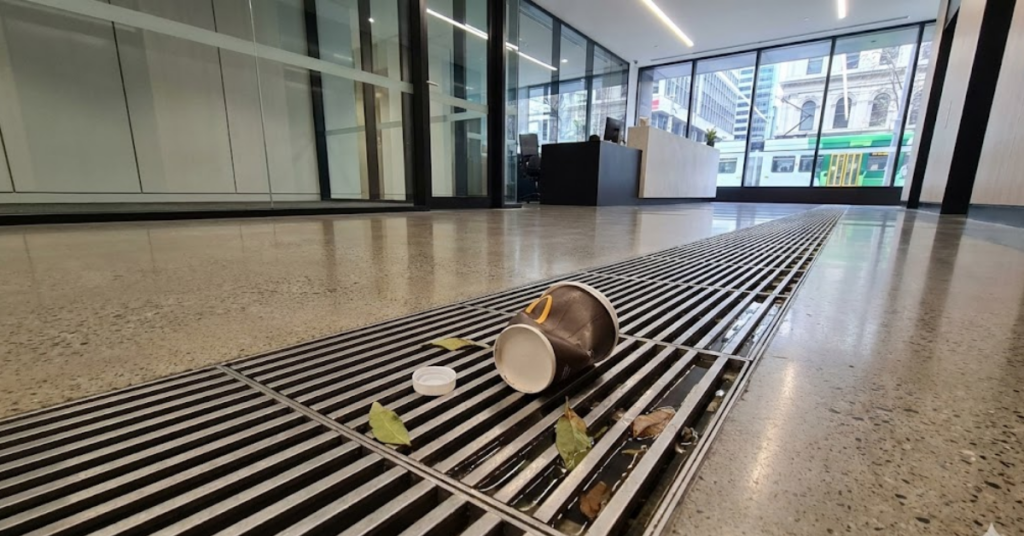
Most blocked drain emergencies start as small warning signs. Knowing the common causes and what to look for helps you act early, before it turns into overflow, downtime, or a compliance issue.
Facility-Specific Blockage Causes
Different facility types have different drainage weak spots, so knowing your site’s usual risks helps prevent repeat blockages. Aged care facilities often face issues from inappropriate items being flushed (incontinence products, so-called flushable wipes, excess paper), plus faster build-up in showers from hair and hygiene products.
Schools and universities can overload systems during peak breaks and may deal with vandalism, while sports facilities often wash in dirt and debris. Industrial sites face process waste like grease, swarf, coolants, or corrosive chemicals, and grease trap neglect is common. Commercial sites often struggle with mixed tenants, turnover, and years of undocumented plumbing changes.
Early Warning Signs Facility Managers Miss
Blocked drains usually give early signs. Spotting them early helps you fix a partial blockage before it becomes a full shutdown and an emergency callout.
Key warning signs to watch for:
- Slow drainage in one fixture, which usually means a partial blockage.
- Several fixtures are draining slowly at the same time, which can point to a main line restriction.
- Gurgling sounds from nearby fixtures (for example, a toilet gurgles when a sink or shower drains), which can signal trapped air behind a blockage.
- Recurring clogs in the same spot, which often suggests a deeper issue like tree roots, pipe deterioration, or poor pipe fall.
- Foul odours coming from drains, which can mean organic build-up, grease accumulation, or a dry/failed trap.
If you spot any of these signs, the next step is to act fast and follow a clear response plan, especially if the blockage is already affecting multiple areas.
Compliance and Documentation Requirements
Commercial drainage incidents are not just about the fix. Clear documentation helps you meet Victorian compliance duties, support insurance claims, and show a defensible response if the issue is reviewed later.
Australian Standards and Regulations
Commercial drainage work must comply with AS/NZS 3500.2:2018 Plumbing and Drainage—Sanitary Plumbing and Drainage. This standard specifies installation requirements, testing protocols, and maintenance obligations. Facility managers are responsible for ensuring contractors work to these standards.
The Victorian Building Authority licenses plumbers and enforces compliance. Emergency drainage work requires a licensed plumber—unlicensed contractors void insurance and expose facilities to liability. VIP Plumbing Group maintains full Victorian licensing and provides documentation verifying compliance with every job.
For reference, the Master Plumbers Association of Victoria provides additional guidance on commercial plumbing standards and compliance requirements at Master Painter Australia.
Documentation for Regulatory Compliance
Documentation for regulatory compliance matters because it protects your facility during audits, insurance claims, and incident investigations. After any emergency drainage response, make sure you capture the right records, not just the fix.
Key records to keep on file:
- Compliance Certificates for all drainage work (in Victoria, plumbers must provide these within 5 business days). Keep them in a dedicated compliance folder for quick access during audits.
- Work completion reports that list what was done, what materials were used, and what steps are recommended to prevent repeat issues. Time-stamped reports with photos and technician notes are ideal if something escalates later.
- Incident reports that document when the issue was found, what actions were taken, which areas were affected, and who may have been exposed, plus contractor response times and the final resolution. These are often required for internal reporting, insurance, and sector-specific compliance (aged care, schools, etc.).
- Safety and incident records aligned with WorkSafe Victoria guidance, which stresses keeping thorough documentation for incidents that create health or safety risks (for example, sewage exposure or slip hazards).
With documentation sorted, the next step is making sure your team knows exactly who to call and what to do the moment a blockage is reported.
Industry-Specific Compliance Obligations
Different facilities have different compliance rules. Emergency drainage work must meet plumbing standards and sector requirements.
Aged care must maintain safe, clean resident areas under the Aged Care Quality Standards. Drainage failures can become reportable if they affect care.
Schools must keep amenities hygienic under the Education and Training Reform Regulations 2017, and issues can trigger inspections. Food sites must meet council and Southeast Water trade waste rules, especially for grease traps, and failed checks can lead to improvement notices with deadlines.
Choosing the Right Emergency Plumbing Partner
In an emergency, the wrong contractor can slow the response and create compliance risk. A commercially ready plumber should arrive fast, work to Victorian standards, and provide the documentation you need straight away.
Essential Qualifications for Commercial Work
Essential qualifications for commercial work matter, because not every plumber is set up for commercial drainage emergencies. Before you lock in a contractor, do a quick check so you avoid compliance issues and repeat callouts.
Crucial checks:
- Current Victorian plumbing licence (verify with the VBA)
- Proven commercial experience (ask for similar-site references)
- Commercial-grade insurance (certificate of currency, plus pollution cover if needed)
- Proper equipment (CCTV inspection and high-pressure jetting at minimum)
Next, it helps to set clear expectations around response time, access requirements, and who your team should contact first when an issue is reported.
Questions to Ask Potential Contractors
Before an emergency hits, ask contractors a few quick questions to confirm they’re truly set up for commercial work: what response time they guarantee, whether they genuinely cover after-hours (not just an answering service), what documentation they provide for audits and insurance, whether they offer preventative maintenance to reduce repeat issues, and how they work around your site constraints (schools, aged care, manufacturing schedules, and access rules).
VIP Plumbing Group’s Commercial Approach
VIP Plumbing Group specialises in commercial and industrial facilities across Melbourne. Our approach addresses the unique challenges facility managers face.
Melbourne-wide 24 hour emergency plumbing service means we’re available when facilities need us most. Our commercial division maintains dedicated resources for aged care, education, manufacturing, and commercial property sectors. We understand regulatory requirements specific to each industry.
Digital reporting through SimPRO provides instant documentation. Every job generates electronic records, including photos, compliance certificates, and detailed reports. Facility managers access these immediately for regulatory filings, insurance claims, or audit requirements.
Preventative maintenance programs reduce emergency frequency. Regular CCTV inspections identify developing issues before they cause failures. Scheduled cleaning maintains system capacity. Proactive replacement of deteriorating components prevents unexpected downtime.
For comprehensive guidance on commercial plumbing systems and maintenance, visit our guide to commercial plumbing blog.
Frequently Asked Questions
How quickly should I expect emergency plumber response in Melbourne?
Legitimate commercial emergency plumbers respond within 60-90 minutes across Greater Melbourne. VIP Plumbing Group guarantees 60-minute response for commercial clients. Be sceptical of contractors promising immediate arrival—verify they have resources positioned across Melbourne, not just technicians travelling from remote areas. After-hours response may extend slightly during peak periods, but true 24-hour services maintain dedicated emergency staff. Distance affects response times, but Melbourne-wide coverage minimises delays.
What documentation do I need for insurance claims after drainage emergencies?
Insurance claims require comprehensive documentation. Capture photos before contractor arrival showing the extent of damage, water levels, and affected areas. Obtain detailed invoices listing services performed, materials used, and labour hours.
Request compliance certificates proving work met Australian Standards. Collect contractor reports explaining the cause, emergency actions taken, and recommendations for preventing recurrence.
Document your immediate response—evacuation procedures, safety measures implemented, and notification timelines. Digital reporting systems like SimPRO consolidate these requirements into comprehensive packages that satisfy insurance assessors.
Should facility managers attempt to clear blocked drains before calling professionals?
No. Commercial drainage systems differ fundamentally from residential systems. Plungers and drain snakes designed for home use prove ineffective on commercial main lines. Chemical drain cleaners create hazardous conditions when professional equipment follows—reactions between chemicals and commercial-grade jetting can produce toxic fumes.
More critically, amateur clearing attempts often push blockages deeper into systems, increasing repair costs and extending downtime. Facility managers serve facilities best by immediately contacting licensed commercial plumbers rather than attempting DIY approaches that compound problems.
What preventative maintenance reduces emergency blocked drain frequency?
Regular CCTV drain inspections identify developing issues before they cause emergencies. Annual inspections for most commercial facilities, quarterly for high-use environments like food service. Scheduled high-pressure water jetting removes accumulating debris before blockages form.
Grease trap servicing prevents the primary cause of commercial kitchen blockages—Southeast Water mandates regular cleaning based on trap size and usage. Staff training on proper waste disposal prevents foreign object introduction. Tree root management near drainage lines catches intrusions early.
Documented maintenance programs demonstrate regulatory compliance and typically reduce emergency callouts by 60-70% compared to reactive-only approaches.
How do I know if a blocked drain requires immediate emergency response versus scheduled maintenance?
Call immediately if sewage backs up into occupied areas, water threatens electrical systems, blockages affect essential services that can’t be isolated, or overflow creates slip hazards in public areas. Schedule maintenance for slow-draining fixtures without backup, recurring minor blockages cleared easily, odours without overflow, or isolated sink/toilet issues with available alternatives.
The key distinction: emergency response addresses immediate health, safety, or operational threats. Scheduled maintenance handles developing issues before they escalate. When uncertain, err towards emergency response—facility managers can’t afford regulatory penalties or occupant injuries from delayed action.
What are the typical costs for emergency blocked drain services in Melbourne commercial facilities?
Emergency callout fees for commercial work range from $400 to $800 depending on timing and location. After hours, weekends, and public holidays incur premium rates.
Simple blockage clearing costs $300-$600 beyond callout fees. Complex mainline blockages requiring CCTV investigation and extensive jetting run $1,000-$3,000. Root intrusion requiring excavation and pipe replacement costs $3,000-$15,000+, based on location and extent.
These figures vary significantly based on access difficulty, equipment requirements, and facility-specific compliance needs. VIP Plumbing Group provides transparent quoting before work proceeds—emergency response doesn’t mean blank-cheque pricing. Preventative maintenance programs cost far less than repeated emergencies, typically paying for themselves within one avoided emergency callout.
Do commercial blocked drain repairs require building permits in Victoria?
Most blocked drain clearing doesn’t require permits—it’s maintenance, not construction. However, pipe replacement or new drainage installation requires plumbing permits through the Victorian Building Authority.
Excavation affecting structural elements may need building permits. Work in heritage buildings faces additional requirements. Trade waste modifications need Southeast Water approval before proceeding. Your plumber should identify permit requirements during the initial assessment.
Licensed commercial plumbers handle permit applications as part of service—facility managers shouldn’t need to navigate regulatory processes independently. VIP Plumbing manages all necessary approvals, keeping facility managers informed without creating administrative burden.
How does digital reporting benefit facility management during drainage emergencies?
Digital reporting systems provide immediate documentation that satisfies multiple stakeholder requirements simultaneously. SimPRO-generated reports include time-stamped photos proving pre-work conditions and post-completion results.
Detailed work descriptions specify actions taken, materials used, and compliance with Australian Standards. Electronic delivery means facility managers access reports within hours, not waiting days for paperwork. These reports feed directly into maintenance management systems, compliance files, and insurance documentation.
During audits, digital records demonstrate proactive maintenance and rapid emergency response. For facilities managing multiple sites, centralised digital reporting consolidates plumbing records across properties, simplifying portfolio management and identifying systemic issues requiring attention.
Conclusion
Emergency blocked drains test facility management capabilities when stakes are highest. The first 60 minutes determine whether you contain an incident or face cascading failures affecting operations, compliance, and occupant safety.
Preparation separates effective facility managers from those who react in crisis. Establish relationships with qualified commercial plumbers before emergencies occur. Document procedures for different emergency scenarios. Train staff on immediate response protocols. Maintain preventative maintenance programs that reduce emergency frequency.
VIP Plumbing Group partners with facility managers across Melbourne to provide comprehensive commercial drainage solutions. Our 30+ years serving aged care, education, manufacturing, and commercial property sectors means we understand your regulatory obligations, operational constraints, and quality expectations.
Contact VIP Plumbing Group for a free facility assessment. We’ll evaluate your drainage systems, identify vulnerabilities, and recommend preventative strategies that reduce emergency risks. Our SimPRO digital reporting provides documentation that satisfies audit requirements while simplifying compliance tracking.
For 24/7 emergency response or to schedule a facility assessment, call 1800 319 522. Protect your facility with Melbourne’s trusted commercial plumbing specialists.